Md. Abdullah-Al Mamun
Data Scientist & Researcher

Md. Abdullah-Al Mamun

Machine Learning · Deep Learning · Artificial Intelligence · Explainable ML

📍 Salo, Finland  ·  M.Sc. Computing Sciences, Tampere University

7 Peer-reviewed publications Q1 Journals 5+ Years Experience Open to Collaboration
Google Scholar GitHub LinkedIn

I am a Data Scientist and Researcher with an M.Sc. from Tampere University, specialising in machine learning, explainable AI, and environmental data science. With 7 peer-reviewed Q1 publications, I build interpretable, data-driven solutions for real-world environmental challenges — from coastal groundwater to flood resilience. Based in Salo, Finland, I am actively seeking research and data science roles.
7Publications
5+Years Experience
3Degrees
Q1Journal Tier

Skills & Technologies

Hover to pause. Spanning programming, ML/DL, cloud, GIS, and visualization.

🐍 Python
📊 R
☕ Java
🌐 JavaScript
🤖 TensorFlow
🔥 PyTorch
🧠 Scikit-learn
📈 NumPy / Pandas
🗺️ QGIS
📉 Power BI
☁️ Microsoft Azure
🗄️ SQL / PostgreSQL
🐍 Python
📊 R
☕ Java
🌐 JavaScript
🤖 TensorFlow
🔥 PyTorch
🧠 Scikit-learn
📈 NumPy / Pandas
🗺️ QGIS
📉 Power BI
☁️ Microsoft Azure
🗄️ SQL / PostgreSQL
🧬 CNNs / RNNs
💬 NLP
👁️ Computer Vision
🔁 Transfer Learning
🎮 Reinforcement Learning
📦 Git / GitHub
🔬 Web Scraping
📲 Android Dev
🌊 GIS Mapping
📡 XAI / SHAP
🧪 Unit Testing
🗃️ MongoDB
🧬 CNNs / RNNs
💬 NLP
👁️ Computer Vision
🔁 Transfer Learning
🎮 Reinforcement Learning
📦 Git / GitHub
🔬 Web Scraping
📲 Android Dev
🌊 GIS Mapping
📡 XAI / SHAP
🧪 Unit Testing
🗃️ MongoDB

Publications

7 peer-reviewed papers in Q1 journals. Click any card to expand full details — abstract, highlights, graphical abstract, and DOI.

Science of the Total Environment  IF 8.0  Q1  ·  3 papers
Marine Pollution Bulletin  IF 4.9  Q1  ·  2 papers
Journal of Contaminant Hydrology  IF 4.4  Q1  ·  1 paper
Environmental Geochemistry & Health  IF 3.8  Q1  ·  1 paper
1
Science of the Total Environment 2026 Q1 IF 8.0
Living on the flood line: Constructing and validating a combined multidimensional resilience index for rural riverine floodplain communities.
Islam A.R.M.T., Mamun M.A., Tasnuva A., Aktar M.N., Mishra M., Mamun A.A., Moin M.J.
+
Writing – review & editing, Visualization, Software, Investigation, Data curation.
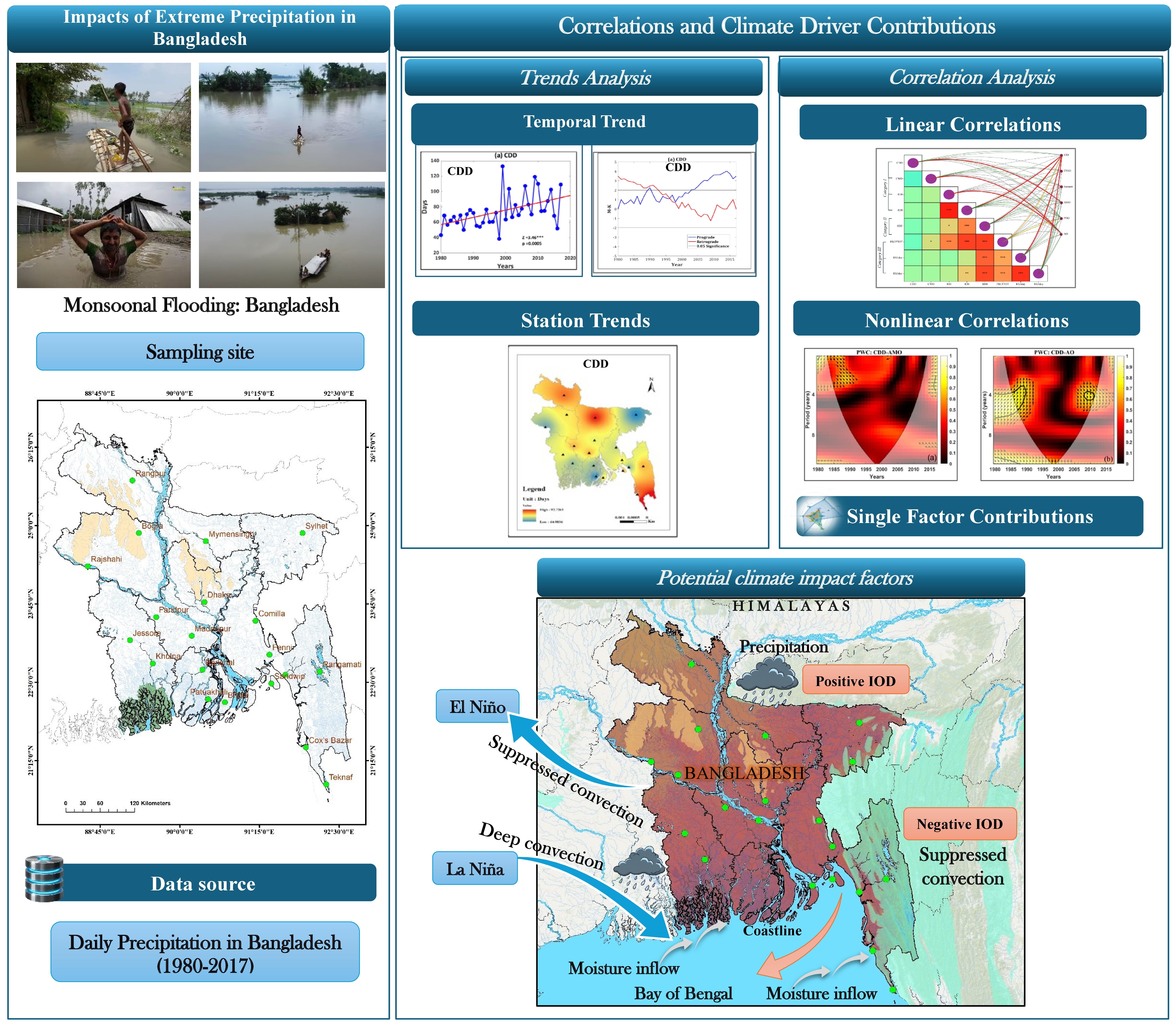
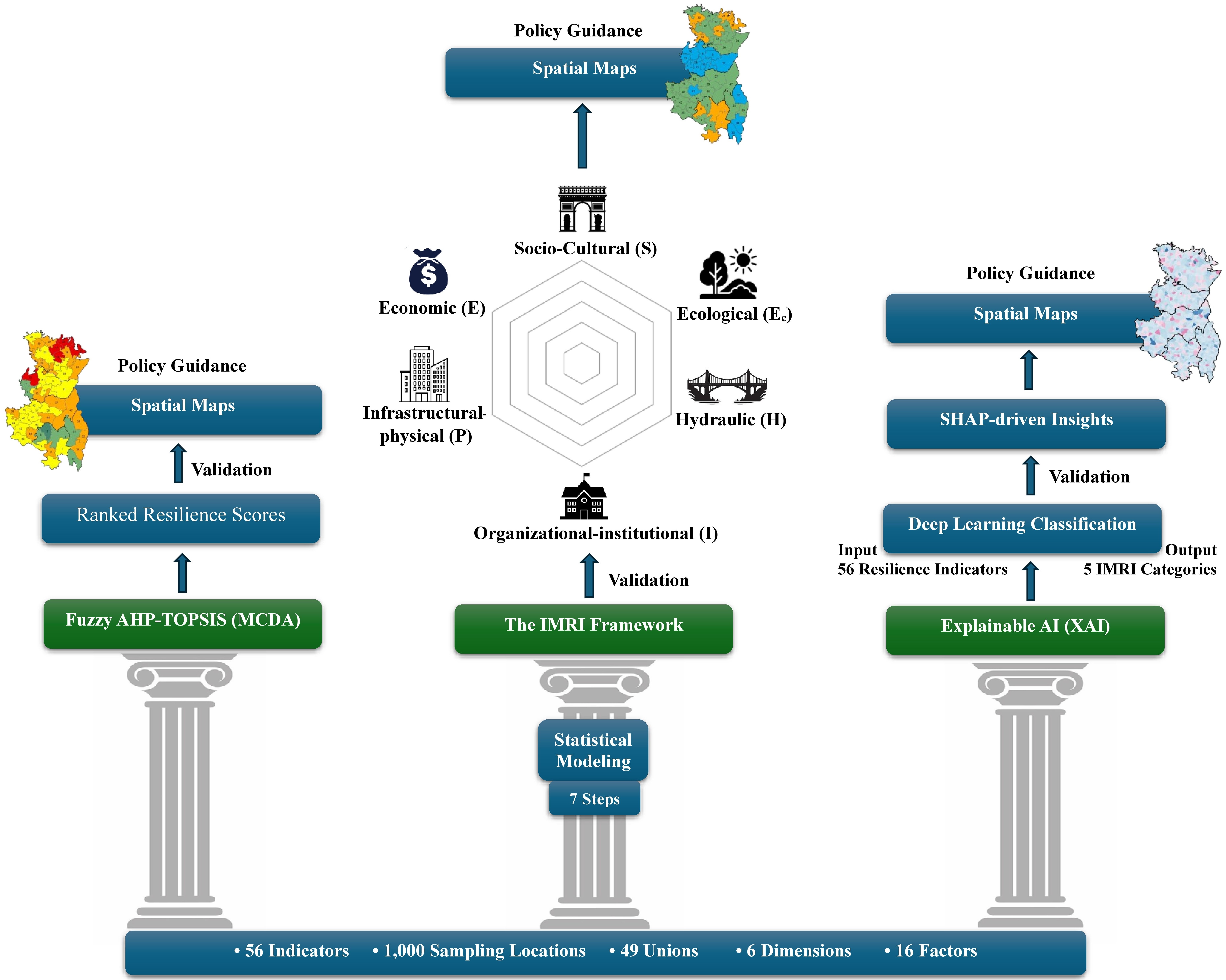
Riverine floodplain communities face escalating risks under climate change, environmental degradation, and socio-economic vulnerability. This study develops a rigorously validated framework for assessing community resilience by integrating multi-criteria decision analysis, principal axis factoring, Monte Carlo–based index construction, deep learning validation, and explainable artificial intelligence. Using 1000 georeferenced observations and 56 multidimensional indicators across socio-cultural, economic, infrastructural, institutional, hydraulic, and ecological domains for 49 unions in the Brahmaputra River Basin (Bangladesh), the study constructs a Combined Multidimensional Resilience Index (CMRI). Deep learning models demonstrate high predictive capability (AUC = 0.989), while SHAP analysis identifies hydraulic deficits, ecological degradation, and institutional weaknesses as primary drivers of vulnerability.
  • Hybrid MCDA–CMRI–AI framework for comprehensive flood-resilience assessment
  • Deep learning model (DR-DNN) achieved very high performance — AUC = 0.989
  • SHAP identified hydraulic deficits, ecological degradation, institutional weaknesses as top drivers
  • CMRI provides a scalable decision-support tool for rural riverine floodplain communities
📄 doi:10.1016/j.scitotenv.2026.181581 ↗
Graphical Abstract CMRI
Fig. Graphical Abstract — CMRI Framework
↗ Open PDF in new tab
2
Environmental Geochemistry & Health 2026 Q1 IF 3.8
Explainable and physics-informed machine learning for seasonal water quality prediction in the monsoon-driven Padma River Basin, Bangladesh.
Islam A.R.M.T., Mamun M.A., Uddin M.N., Sowrav S.F.F., Alam M.N.E., Khan S.R., Chowdhury M.H., Choudhury T.R.
+
This study presents the first integrated explainable and physics-informed AI framework combining ML, deep learning, and Physics-Informed Neural Networks (PINNs) to predict and interpret seasonal water quality dynamics in the Padma River Basin. Using 44 monitoring sites sampled during winter and monsoon seasons, the framework integrates WQI assessment, SHAP and game-theory attribution, probabilistic uncertainty analysis, and spatial autocorrelation. Seasonal variability dominates over spatial variability, with winter low-flow intensifying solute concentrations, while monsoon discharge promotes basin-wide dilution. PINN-based data augmentation improves model generalization, and explainable modeling identifies nitrate, dissolved oxygen, pH, and suspended solids as key seasonal drivers.
  • Seasonal variability dominated water quality dynamics (p < 0.0001)
  • DNN performed best in winter (R² ≈ 0.98); Ridge Regression robust during monsoon
  • NO₃⁻ emerged as dominant contaminant with episodic WHO limit exceedance
  • PINN-based data augmentation improved prediction stability under limited sampling
  • Spatial analysis revealed localized winter degradation hotspots and monsoon recovery
📄 doi:10.1007/s10653-026-03031-z ↗
Graphical Abstract WQI
Fig. Graphical Abstract — WQI Prediction Framework
↗ Open PDF in new tab
3
Science of the Total Environment 2026 Q1 IF 8.0
Hybrid data-driven framework for interpretable prediction of nitrate and sulfate risks in coastal aquifers.
Mamun M.A., Aktar M.N., Uddin M.N., Chowdhury M.H., Islam M.S., Rahman M.S., Uddin M.R., Hossain M.J., Zahid A., Senapathi V., Islam A.R.M.T.
+
Writing – original draft, Visualization, Software, Formal analysis, Conceptualization.
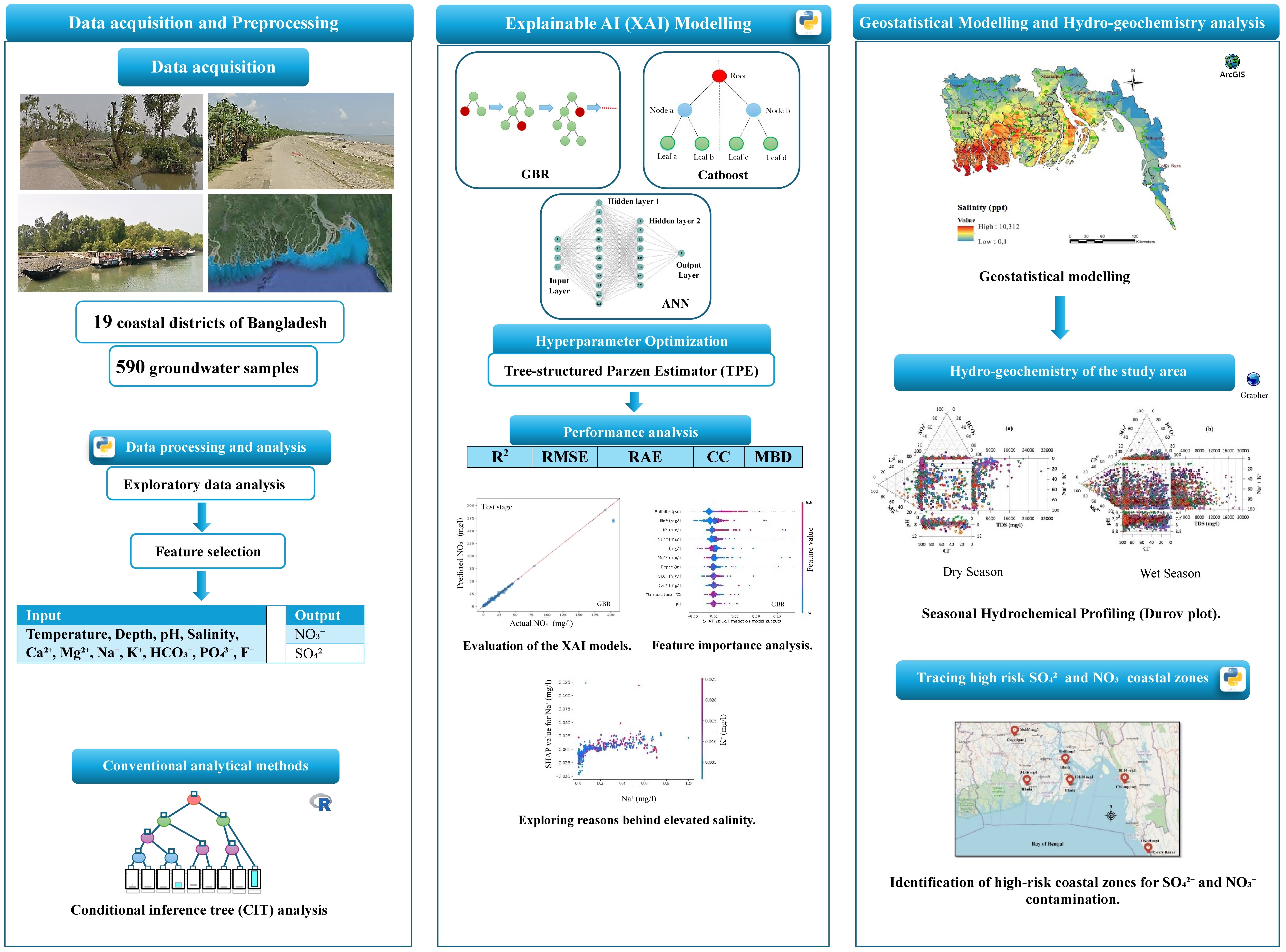
Coastal aquifers in southern Bangladesh are increasingly threatened by groundwater overexploitation, saltwater intrusion, and diffuse contamination. This study proposes a hybrid, data-driven, and interpretable modeling framework integrating machine learning, statistical analysis, and spatial assessment to predict nitrate (NO₃⁻) and sulfate (SO₄²⁻) risks in coastal aquifers. The framework identifies dominant hydrogeochemical drivers, evaluates spatial contamination hotspots, and improves interpretability of prediction outcomes to support groundwater risk management and evidence-based decision-making in vulnerable coastal environments.
  • Domestic wastewater and saltwater intrusion increased SO₄²⁻ concentrations
  • CatBoost optimal for sulfate; ANN performed best for nitrate prediction
  • Ca²⁺, Na⁺, and K⁺ were primary drivers of elevated SO₄²⁻ and NO₃⁻ levels
  • Hotspots strongly influenced by saltwater intrusion and agricultural practices
📄 doi:10.1016/j.scitotenv.2025.181190 ↗
Graphical Abstract SO4 NO3
Fig. Graphical Abstract — Nitrate & Sulfate Risk Framework
↗ Open PDF in new tab
5
Marine Pollution Bulletin 2026 Q1 IF 4.9
Tracing source footprints of heavy metal(oid)s in coastal soils using traditional statistical techniques and machine learning data-driven models.
Islam A.R.M.T., Varol M., Mallick J., Mamun M.A., Mia M.Y., Siddique M.A.B., Islam M.S., Aktar M.N.
+
Methodology, Investigation, Formal analysis, Writing – review & editing.
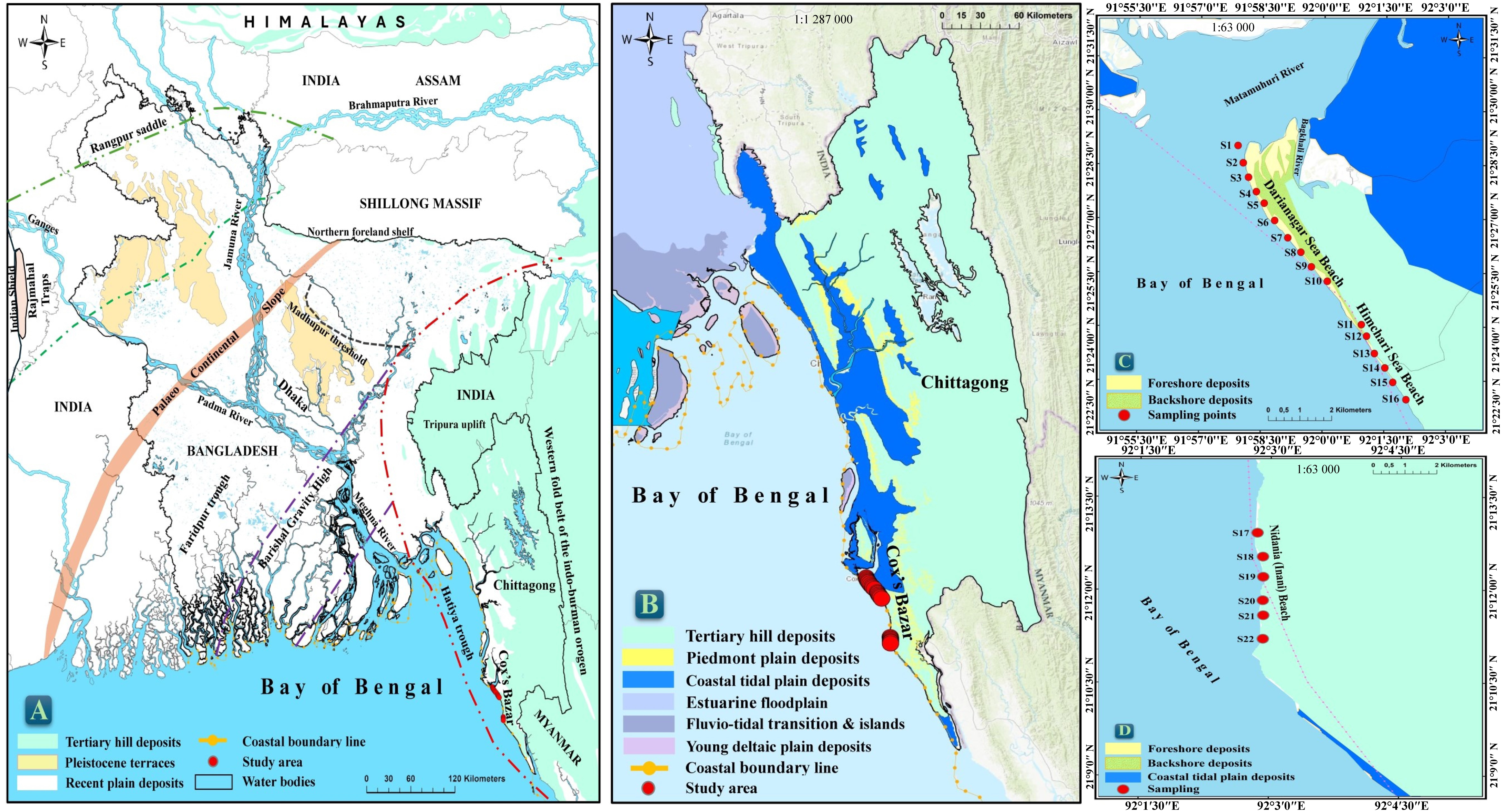
This study used traditional statistical techniques (PCA, PCoA) together with machine-learning models including Self-Organizing Maps (SOM), Conditional Inference Trees (CIT), Ridge Regression (RR), and SHAP to detect and trace heavy metal sources along the northeast coast of Bangladesh. Concentrations of Pb, Cd, Mn, and As exceeded average shale values. SOM indicated natural sources for As, Ni, Fe, and Mn, and shipbreaking industry sources for Cu, Zn, and Pb. SHAP highlighted soil pH, silt, and organic matter as key contributors to HM accumulation.
  • PCoA explained 75.46% of total spatial variation
  • SOM identified Cu, Zn, and Pb linked to shipbreaking activity
  • CIT showed geological controls for Mn and Ni via soil silt and pH
  • SHAP: soil pH, silt, and organic matter as key drivers of HM accumulation
  • Ridge Regression showed high predictive performance for Pb, Zn, and Mn
📄 doi:10.1016/j.marpolbul.2025.118701 ↗
SOM component planes
Fig. SOM component planes and clustering for heavy metals, coastal Bangladesh
↗ Open PDF in new tab
6
Journal of Contaminant Hydrology 2025 Q1 IF 4.4
Optimizing coastal groundwater quality predictions: A novel data mining framework with cross-validation, bootstrapping, and entropy analysis.
Islam A.R.M.T., Mamun M.A., Hasan M., Aktar M.N., Uddin M.N., Siddique M.A.B., Chowdhury M.H., Islam M.S., Bari A.B.M.M., Idris A.M., Senapathi V.
+
Writing – review & editing, Methodology, Formal analysis, Data curation.
This work investigates Gaussian Process Regression (GPR), Bayesian Ridge Regression (BRR), and Artificial Neural Network (ANN) for predicting groundwater quality in coastal Bangladesh. Optuna-based optimized hyperparameters improve model accuracy. Combined cross-validation and bootstrapping methods were used to build six predictive models. The entropy-based ECWQI was converted into five quality classes. SOM and spatial autocorrelation identified four distinct spatial patterns. ANN (CV) and ANN (B) models outperformed all others (R² = 0.971 and 0.969 respectively). SO₄²⁻, Cl⁻ and F⁻ played an important role in prediction accuracy.
  • ANN (CV) and ANN (B) outperformed all data mining approaches (R² = 0.971)
  • Normalized ECWQI adopted to interpret coastal groundwater quality classes
  • SO₄²⁻, Cl⁻, and F⁻ had significant role in predictive accuracy
  • Moran's I for F⁻ and SO₄²⁻ demonstrates strong spatial autocorrelation
📄 doi:10.1016/j.jconhyd.2024.104480 ↗
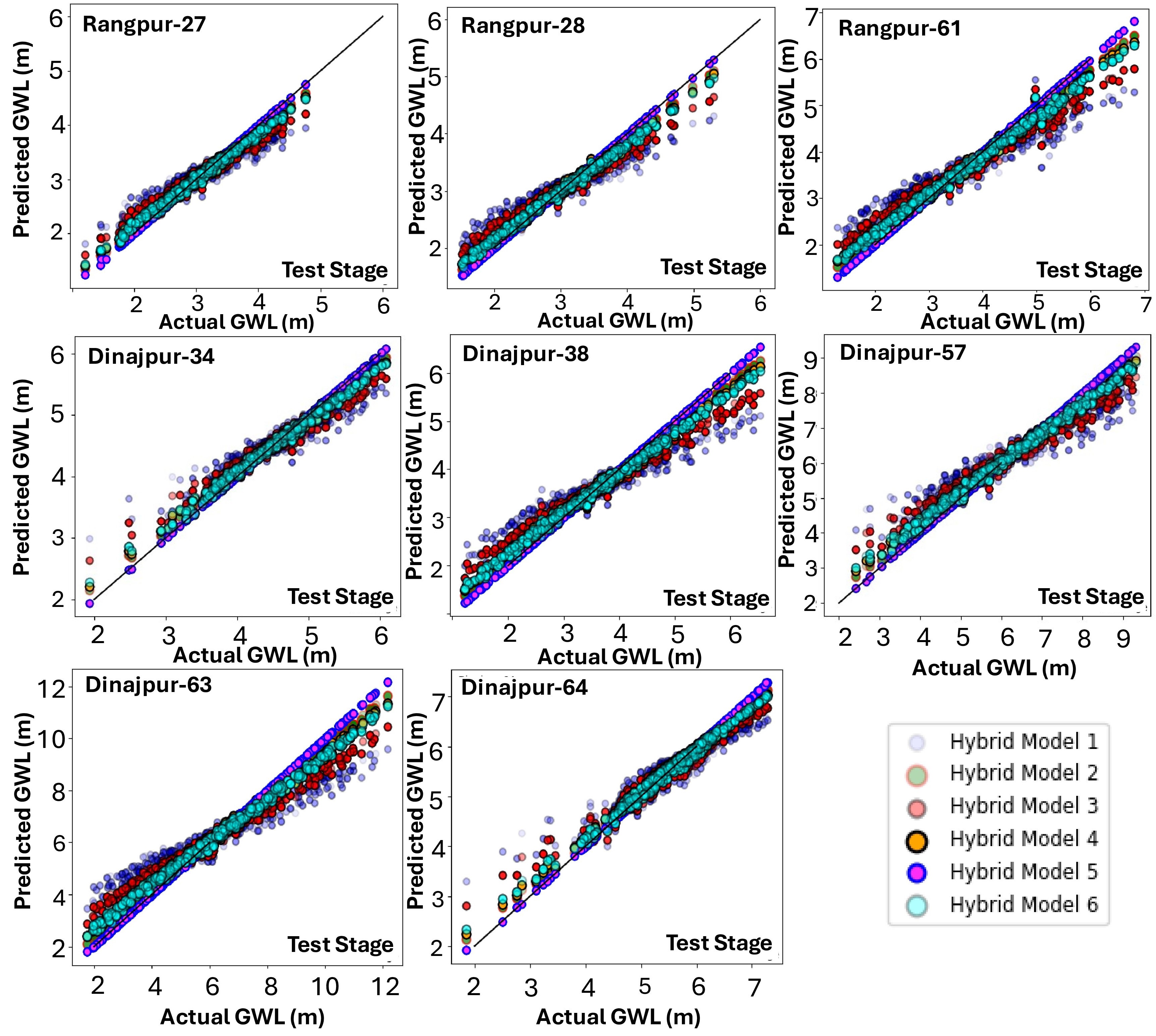
Graphical Abstract coastal water quality
Fig. Graphical Abstract — Coastal Groundwater Quality ML Framework
↗ Open PDF in new tab
7
Science of the Total Environment 2024 Q1 IF 8.0
Predicting groundwater phosphate levels in coastal multi-aquifers: A geostatistical and data-driven approach.
Mamun M.A., Islam A.R.M.T., Aktar M.N., Uddin M.N., Islam M.S., Pal S.C., Islam A., Bari A.B.M.M., Idris A.M., Senapathi V.
+
Writing – original draft, Software, Methodology, Formal analysis.
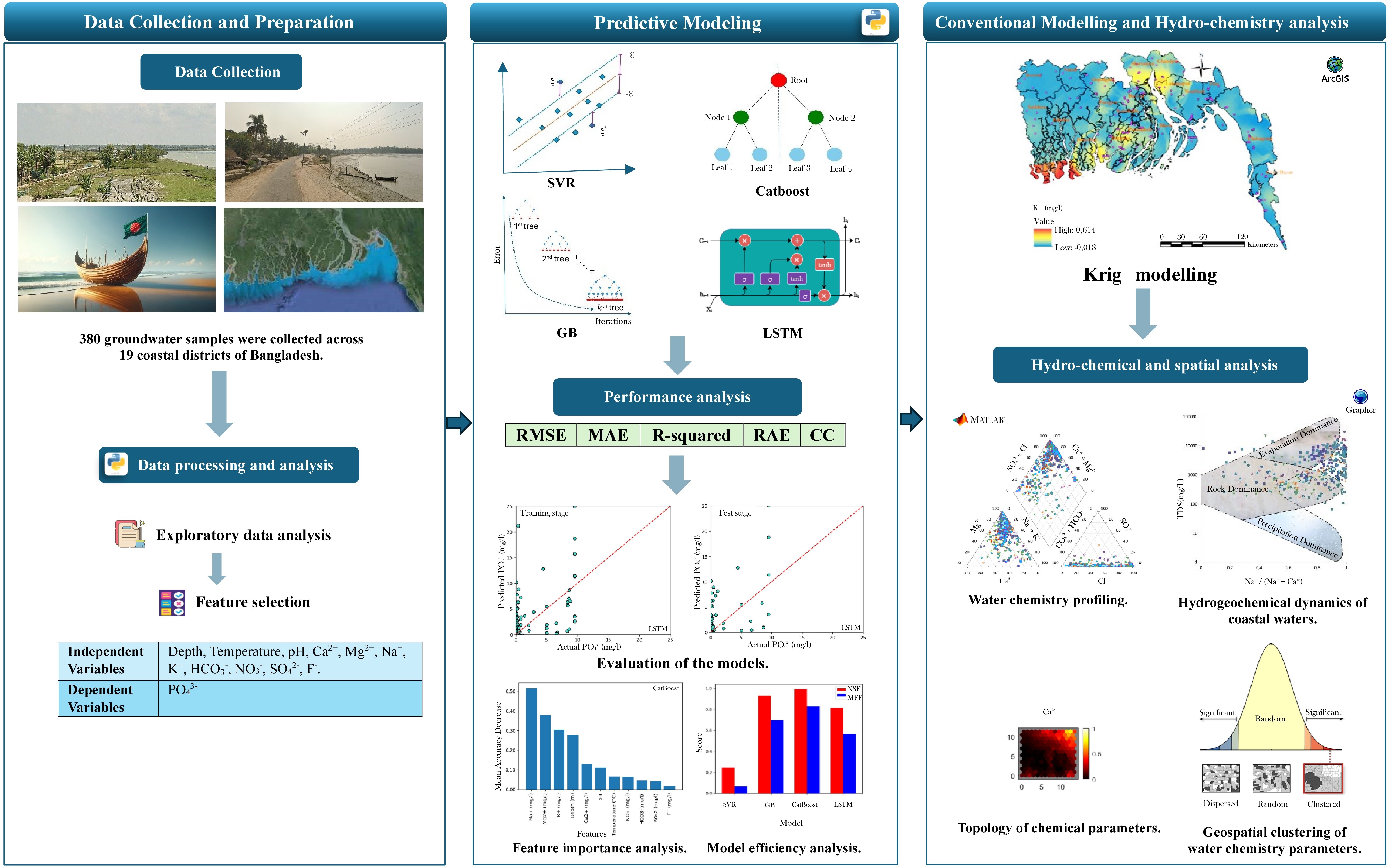
This work combines geostatistical modeling, self-organizing maps (SOM), and data-driven algorithms to determine the driving factors and predict groundwater phosphate (PO₄³⁻) content in coastal multi-aquifers in southern Bangladesh. Four algorithms — CatBoost, GBM, LSTM, and SVR — were evaluated using 380 samples and 15 prediction parameters. The CatBoost model showed exceptional performance in both training (R² = 0.999) and testing (R² = 0.989). Phosphate dissolution and saltwater intrusion, along with phosphorus fertilizers, increase PO₄³⁻ content in groundwater. Na⁺, K⁺, and Mg²⁺ significantly influenced prediction accuracy.
  • Dataset of 15 hydrochemical parameters from 380 wells
  • CatBoost + geostatistics + SOM predicted PO₄³⁻ with R² = 0.99
  • SOM identified three distinct spatial patterns in aquifer chemistry
  • Na⁺ and K⁺ showed high spatial autocorrelation impacting phosphate distribution
  • Semi-variogram models confirmed agricultural runoff increases PO₄³⁻ heterogeneity
📄 doi:10.1016/j.scitotenv.2024.176024 ↗
Graphical Abstract PO4
Fig. Graphical Abstract — Groundwater Phosphate Prediction
↗ Open PDF in new tab

Projects

A selection of research repositories and applied ML projects on GitHub.

Work Experience

May 2024 – Present
Research Engagement & Independent Research
Career Transition · Salo, Finland
  • Produced 7 peer-reviewed publications in Q1 journals on environmental AI and ML
  • Collaborative research with international academic groups (Bangladesh, Finland)
  • Actively seeking research-oriented roles in machine learning and data science
March 2022 – June 2023
Master's Thesis Worker
Valmet Automotive EV Power Oy · Salo, Finland
  • Evaluated and selected the best BI tool & SPC software for the organization
  • Utilized Python, Power BI, and Excel for data analysis and visualization
  • Recommended Microsoft Power BI — successfully adopted company-wide
August 2021 – November 2023
Laboratory & Quality Operator
Valmet Automotive EV Power Oy · Salo, Finland
  • Quality control for 48-volt battery packs — achieved 98% quality rate
  • Analyzed production line data in Excel, visualized insights in Power BI

Education

M.Sc. Computing Sciences — Data Science
Tampere University, Finland
Completed: May 2024
Pattern Recognition & ML (5/5) · Data Mining (5/5) · ML Algorithms (5/5) · Dimensionality Reduction (4/5) · Statistical Inference (4/5)
B.Sc. Information Technology — Software Engineering
Metropolia University of Applied Sciences, Finland
Completed: December 2017
Advanced Programming (Python, Java) · Software Engineering · Web Development · Android App Development
B.Sc. Biotechnology & Genetic Engineering
Mawlana Bhashani University, Bangladesh
Completed: January 2010
Molecular Biology · Bioinformatics · Biostatistics · Biochemistry · Genetics

🎨 Art & Paintings

When not modeling data or training neural networks, I pick up a brush.

Magnolia
Shimul
Leppävaara
Baltic Sea
Global Warming
Talvi Suomessa
Sunrise
Snow
Storm
Leaves
Fibo
Intuitive
Magnolia
Shimul
Leppävaara
Baltic Sea
Global Warming
Talvi Suomessa
Sunrise
Snow
Storm
Leaves
Fibo
Intuitive
View Full Gallery →

Bookshelf Reading Shelf

Books currently on my desk — machine learning, deep learning, generative AI, and the craft of data science.

Machine Learning with PyTorch and Scikit-Learn
Sebastian Raschka · Yuxi Liu · Vahid Mirjalili
Core ML
Data Science Projects with Python
Stephen Klosterman
Case Studies
Mastering PyTorch - Second Edition
Mastering PyTorch — 2nd Edition
Ashish Ranjan Jha
Deep Learning
Modern Computer Vision with PyTorch
Modern Computer Vision with PyTorch — 2E
V. Kishore Ayyadevara · Yeshwanth Reddy
Computer Vision
Mastering NLP from Foundations to LLMs
Lior Gazit · Meysam Ghaffari
NLP
Transformers for Natural Language Processing
Denis Rothman
Transformers
Generative AI with LangChain
Ben Auffarth
GenAI
RAG-Driven Generative AI
Denis Rothman
RAG
LLM Engineer's Handbook
Paul Iusztin · Maxime Labonne
LLMOps
Building LLM Powered Applications
Valentina Alto
Applications
Building Agentic AI Systems
Anjanava Biswas · Wrick Talukdar
Agents
Learn Python Programming
Learn Python Programming — 4E
Fabrizio Romano · Heinrich Kruger
Python
Machine Learning with PyTorch and Scikit-Learn
Sebastian Raschka · Yuxi Liu · Vahid Mirjalili
Core ML
Data Science Projects with Python
Stephen Klosterman
Case Studies
Mastering PyTorch - Second Edition
Mastering PyTorch — 2nd Edition
Ashish Ranjan Jha
Deep Learning
Modern Computer Vision with PyTorch
Modern Computer Vision with PyTorch — 2E
V. Kishore Ayyadevara · Yeshwanth Reddy
Computer Vision
Mastering NLP from Foundations to LLMs
Lior Gazit · Meysam Ghaffari
NLP
Transformers for Natural Language Processing
Denis Rothman
Transformers
Generative AI with LangChain
Ben Auffarth
GenAI
RAG-Driven Generative AI
Denis Rothman
RAG
LLM Engineer's Handbook
Paul Iusztin · Maxime Labonne
LLMOps
Building LLM Powered Applications
Valentina Alto
Applications
Building Agentic AI Systems
Anjanava Biswas · Wrick Talukdar
Agents
Learn Python Programming
Learn Python Programming — 4E
Fabrizio Romano · Heinrich Kruger
Python

Let's Connect & Collaborate

Open to research collaborations, doctoral opportunities, and data science roles.

Email
md.abdullah.al.mamun.tu@gmail.com
Location
Isotuvankatu 5A, 24260 Salo, Finland 🇫🇮
GitHub
github.com/Abdullah-TU
LinkedIn
md-abdullah-al-mamun
Google Scholar
View Publications
ORCID
0009-0001-6749-9171